DON’T GO GENTLE caused PETE’S EYEBROWS to form a CATERPILLAR ARCH
The Dramatic Premise
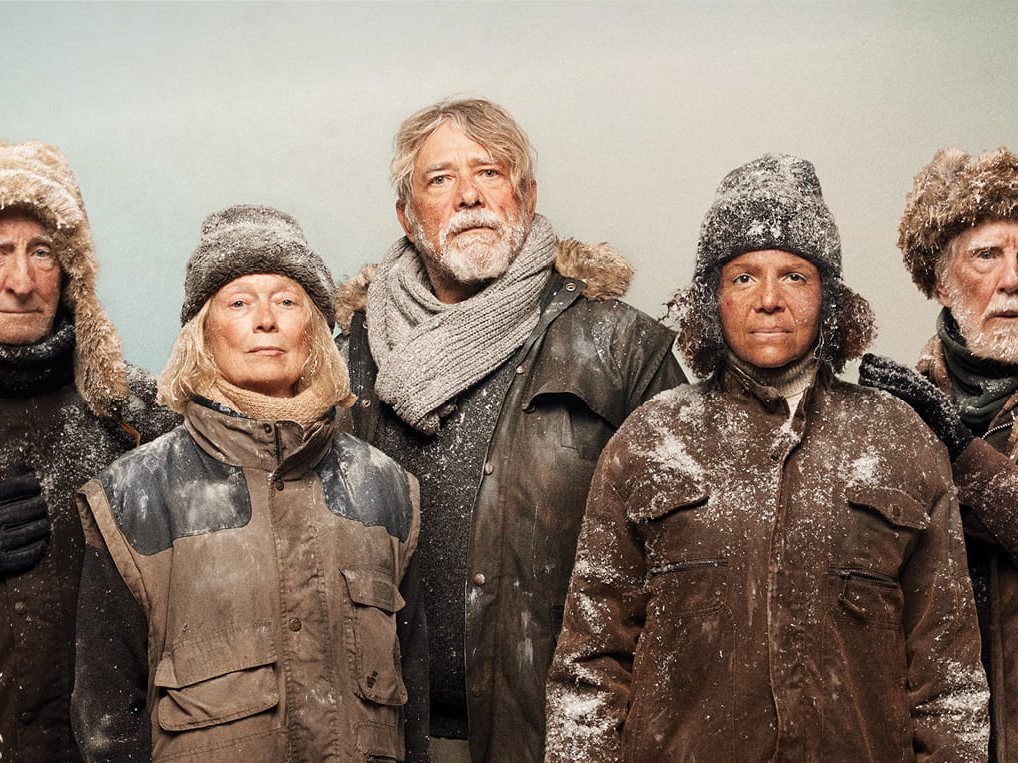
Robert Falcon Scott is racing Roald Amundsen to the South Pole. It’s the Age of Heroic Antarctic Exploration. As the play begins, we join Scott and his team as they make their final push to their distant, unseen target.
They are cold. They are hungry. They are battling blizzards and avoiding crevasses. But they push on despite the burgeoning frostbite.
But wait…
Why did the play open with an opera singer? Why are all of Scott’s men so old? And why are some of them women?
Slowly, but surely – as slow and as sure as Scott’s journey to the South Pole – a different story emerges.
A touching story about old age, human frailty, failing memories, crushing loss and that rage we feel against the dying of the light.
Patricia Cornelius’ carefully woven script is a thing of beauty. She moves, with deft agility, between fantasy and reality, hope and despair. She evokes both the tragedy and the beauty of old age.
The Moment
Deep into the second act, Scott’s trusted right-hand man, Titus, passes away.
Titus heralds his demise by melding two iconic lines.
First, he quotes from the Dylan Thomas poem which gave this play its name:
“Do not go gentle into that good night,
Old age should burn and rave at close of play.
Rage, rage against the dying of the light.”
And then, with a wistful glance over his shoulder to his sleeping companions, he quotes from his alter ego, Lawrence “Titus” Oates:
“I am just going outside and may be some time.”
But the real emotional gut punch is yet to come.
Ushering him into the afterlife is his son, Peter, dressed in Vietnam-War-era army fatigues.
In a short conversation, brimming with love and loss, anger and remorse, we learn why Titus outlived his boy.
And then they walk off stage together, following the light.
For more information about Don’t Go Gentle:
Do Not Go Gentle – Sydney Theatre Company
(Originally posted on 5 June 2023.)


Leave a comment