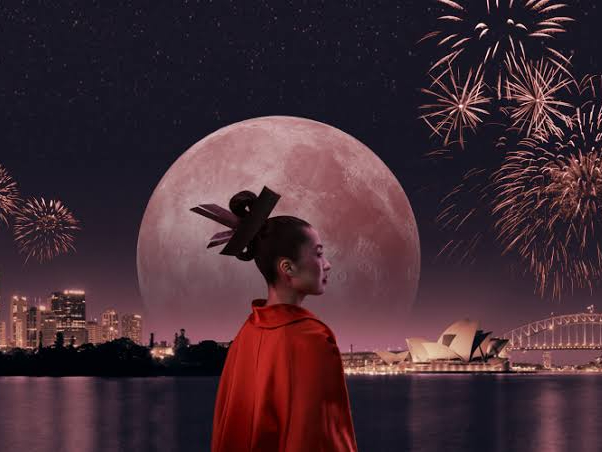
MADAMA BUTTERFLY caused PETE’S EYEBROWS to form a HIGH ARCH.
The Dramatic Premise
American naval officer, B F Pinkerton, marries Cio-Cio-San (aka Madama Butterfly) for his own selfish purposes. He knows Japanese divorce laws are lax.
Cio-Cio-San, however, is in love and doesn’t see Pinkerton’s nefarious intentions. She even converts to Christianity, an act which sees her banished from her family.
During the first Act, Cio-Cio-San introduces her most prized possessions, which includes an ornate case which she refuses to open, even for her new husband.
Much of the second Act sees the love-lorn Cio-Cio-San awaiting the return of her beloved’s ship in Nagasaki Harbour. Three years have passed since Pinkerton returned to America but her love for him remains true. And it emerges that her wedding night left her pregnant and that the child we see playing with her nanny is her son.
Pinkerton’s ship is finally spotted in the bay and the dastardly American finally visits Cio-Cio-San. But he, too, has a secret: his American wife.
When Cio-Cio-San reluctantly allows Mrs Pinkerton to raise her child, the content of the prized ornate case – and its diabolical purpose – is finally revealed.
The Moment
Attending the Handa Opera in the Sydney Botanic Gardens, near Mrs Macquarie’s Chair, looking across Farm Cove to the Sydney Opera House and the Harbour Bridge beyond, is something everybody should do at least once in their life.
It’s a magical experience.
The sublime music. The drama unfolding on the stage. The water lapping against the walls of the harbour. Ferries transiting back and forth as planes traverse the sky. And the Sydney skyline towering above.
It’s like entering another world.
Puccini’s Madama Butterfly features some truly beautiful arias including the revered Un Bel Di Vedremo (One Beautiful Day). But the moment which sticks in my mind is when faithful Cio-Cio-San climbs onto the roof of her home and gazes over the Japanese Harbour whilst singing a sorrowful lament about her husband’s delayed return to her arms and her bed….and the actress is, in real life, gazing across Sydney’s glorious harbour from Farm Cove towards Kirribilli, a half-crescent moon hanging in the clear night sky above the Harbour Bridge.
It took my breath away.
The Curtain Call
I don’t mean to be flippant, but the final bows were particularly uplifting.
Firstly, I was pleased to see the stagehands, in their hard hats, recognised for their contribution. The set is completely transformed during the intermission. It required three cranes! Don’t go for a drink. Stay in your seat and enjoy the transformation. It’s part of the show.
Secondly, I was amused when Paul O’Neill, playing Pinkerton, was initially booed when he took his bows. In this woke world, the character deserved every inch of the approbation he received. The actor took the reception in good humour before using all his acting skills to communicate, through his body language, that he deserved the traditional applause for his performance, even if his character did not.
Finally, there was Eva Song, as Cio-Cio-San. Only moments before she was acting out that tragic end to her character’s story – with compelling conviction – but now she was just a young woman enraptured by the raucous reception she received for a job awfully well done. Her personal joy was as palpable as her character’s misery.
For more information about Opera Australia’s production of Madama Butterfly:
Madama Butterfly on Sydney Harbour | Opera Australia
(Originally posted on 5 April 2023.)


Leave a comment