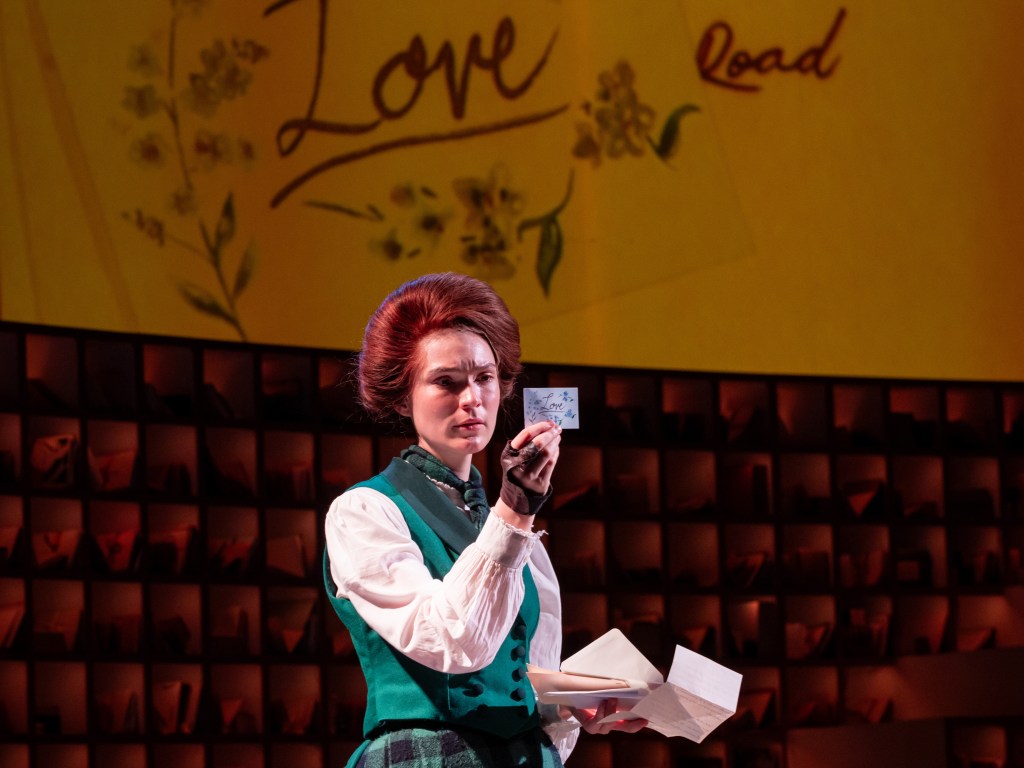
THE DICTIONARY OF LOST WORDS caused PETE’S EYEBROWS to form a CATERPILLAR ARCH
The Dramatic Premise
Esme Nicoll is 4 years old. She spends her days at the Scriptorium in Banbury Street, Oxford, where her father is helping Sir James Murray compile the first Oxford English Dictionary.
But whilst Sir James and his team of lexicographers are creating history, little Esme is creating havoc. Crawling under the sorting table. Crawling on the sorting table. And collecting words discarded from the burgeoning dictionary. She even burns her hand trying to save her deceased mother’s name from the fire.
But as she grows older, Esme becomes more discerning.
Esme learns that only words with a proven etymology are considered worthy of Oxford’s dictionary. They must have been used in literature. Words of lesser pedigree are banished to the furnace.
But if most works of literature are written by men – and if most publishers are also men – does that not mean that only words approved by men make it into the dictionary? But what of words used by the common woman? What happens to those words?
Set against the backdrop of the Suffrage Movement (opposed by men) and onwards towards a Great War (created by men), Esme sets about creating her Dictionary of Lost Words; akin to an early 20th Century, leather-bound version of Urban Dictionary.
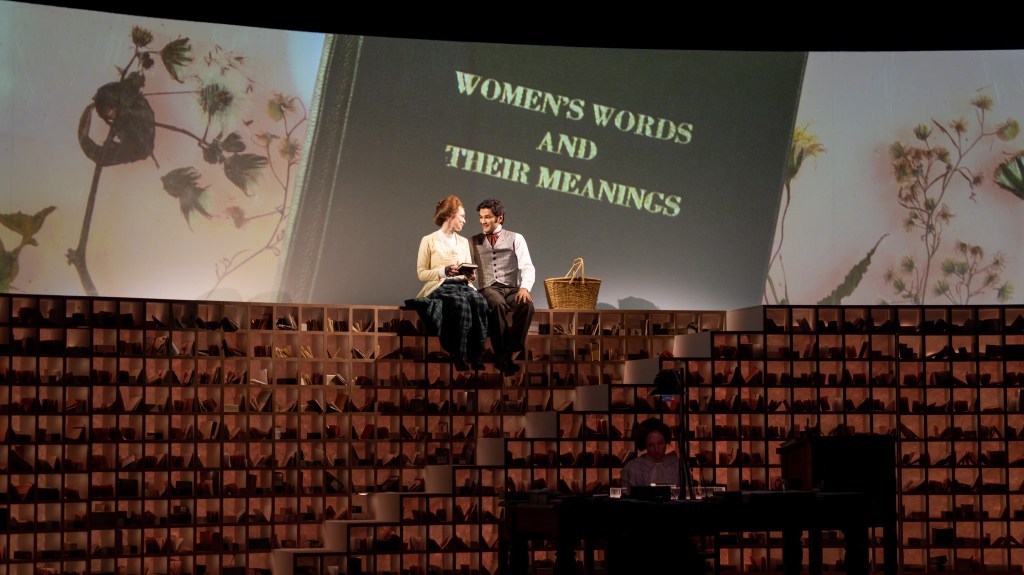
Photo Credit – Daniel Boud / STC
The Moment
After learning her self-worth in Act 1 and negotiating the challenges facing a girl burgeoning into womanhood early in Act 2, Esme has an epiphany about the beauty to be found in the colloquial use of language.
She explains to her bondmaid, Lizzie, that a word used by a lower-class woman is just as powerful and just as expressive as a word used by a man in a literary novel. Each has their own value. Why should only the latter attain credibility in a dictionary?
Several scenes later, Esme tells Lizzie how much she dislikes the word bondmaid. Lizzie responds that she likes the word. She feels honoured to be bonded to Esme. And she ends the argument by wryly observing that the word doesn’t belong to Esme. It’s her word too.

Photo Credit – Daniel Boud / STC
A Love for Words
There was some amusing banter in the row behind us as we waited for the house lights in the Drama Theatre to go down.
A man was teasing his (I assume) wife by asking whether he could expect any action in the play which was about to begin.
“Will there be any sword fights?”
“No.”
“Any brawls?”
“No, it’s a play about words.”
“Some fisticuffs over a game of Scrabble then?”
“I give up.”
I can attest that there were no games of Scrabble in The Dictionary of Lost Words. Nor were there any sword fights.
But this is a play which celebrates words. Whether literary or common. Whether formal or colloquial. It reminds us that all words have meaning. And that all words are beautiful. Even the ugly ones.
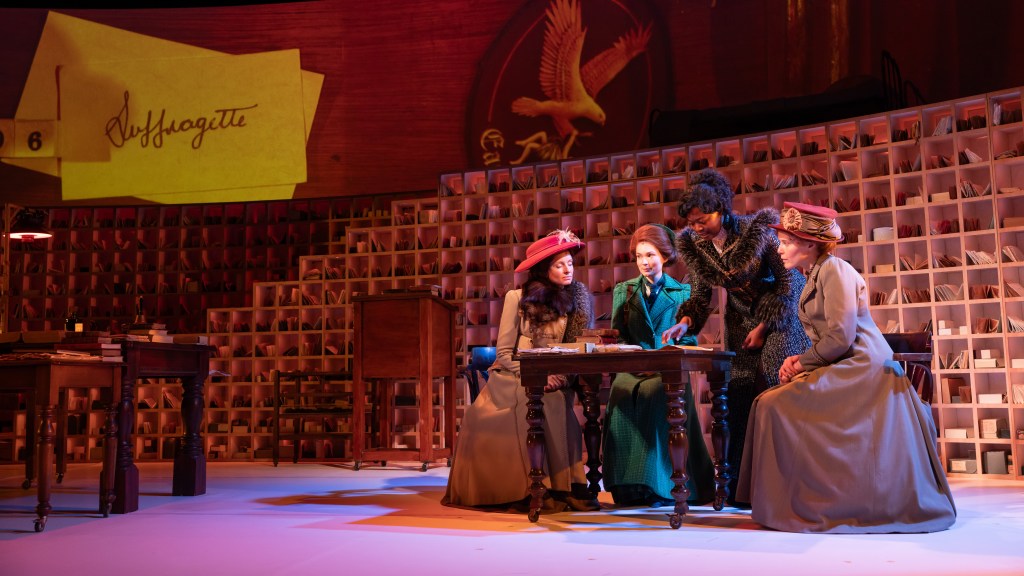
Photo Credit – Daniel Boud / STC
The Show Must Go On
After the Acknowledgment of Country, but before the play began, Director Jessica Arthur took to the stage. She explained that Sydney’s eighth wave of COVID-19 had created a havoc of its own.
Of the eight cast members, four were unable to perform. For the first time in my theatre-watching experience, four understudies had been cramming to ensure that the near sold-out show would go on. Yes, they were compelled to perform with the script in their hands, but the only other option was to cancel the performance.
(Just one humble suggestion from this humble reviewer: perhaps the scripts could be mocked-up to resemble leather-bound volumes, in keeping with look and feel of the production.)
My wife and I are very grateful for STC’s commitment to their audience and for the tenacity of the cast and crew for getting the job done. The relief on their faces at the raucous curtain call was palpable. But very well deserved.
This review is based on the matinee performance of The Dictionary of Lost Words on 4 November 2023. For more information:


Leave a comment